
Balayage, Foilayage & Airtouch Lived-In Blonde, Sydney
Balayage, Foilayage and Airtouch — colour that grows out softly, resists brassiness, and doesn't demand constant toning.
★★★★★ 5.0 on Google · 300+ verified reviews
Which technique is right for you?
Not every blonde client needs the same technique
The right one depends on your hair, your maintenance tolerance, and the look you want. Here's the honest breakdown of each, so you can walk in already knowing what to ask for. If you're still unsure after reading, that's exactly what a consultation is for.
A note on the colour itself: for lightening, we use a specialised colour line that lifts and deposits colour at the same time — not a separate bleach-then-tone process. For toning services like Root Tap, Root Shadow and general toner, we use semi-permanent and demi-permanent colour — never a permanent colour application.
Balayage & Foilayage
What is balayage?
Balayage is a hand-painted technique where lightener is applied directly to the surface of the hair in a triangular section — no foil involved. Because it works in open air, with no foil trapping heat to speed the process, a single balayage session typically lifts hair a maximum of around 3 levels, even when finished under a clear foil.
Balayage vs. ombre — not quite the same thing
Ombre describes a look: a gradual, continuous colour effect where the roots stay darkest and the ends lightest, with a soft transition and no hard line between them. Balayage is one technique used to achieve that look. A softer, lower-contrast version of ombre is often called sombre.
How we achieve the look — Foilayage
Hand-painted balayage alone has real limits: it lifts hair more slowly and doesn't hold its lightness as predictably over time. We've refined the process into what we call Foilayage — using foil placement to achieve the same soft, natural ombre effect as hand-painted balayage, but with more control, stronger lift, and colour that lasts noticeably longer between visits.
What happens during the service
We apply Foilayage placement according to the specific look you want. After washing, we apply a root shadow to blend seamlessly into the lightened lengths, keeping the whole result soft and low-maintenance rather than creating a hard line at the regrowth. Once processing is complete, we apply a proper reparative hair treatment, then cut or blow-dry to finish.
Maintenance: every 4–6 months
Airtouch
What is Airtouch?
Airtouch is a technique developed by Russian colourists. Using a stream of air — from a hairdryer or a specialised blower — we separate shorter, finer hairs from longer, heavier ones within a section. The finer strands lift and blow out of the section naturally, while the longer, heavier strands stay in place. Only those remaining longer strands are then lightened in foil.
The result is a natural ombré with very strong lightness achievable in a single step, close to the root — without lightening every strand indiscriminately the way traditional foiling does.
Why it gives such soft, low-maintenance regrowth
Because the finer, wispier strands are deliberately left out of the lightening process, the transition from your natural root colour into the lightened lengths happens gradually, strand by thickness of strand — not as a single hard line the way conventional foiling creates. That's why Airtouch regrowth reads as soft and diffused rather than obviously "grown out," and why it's genuinely one of the few techniques that can achieve strong, near-root lightness without looking harsh at the root the moment new growth appears.
What happens during the service
We apply the Airtouch placement according to the specific look you want. After washing, we apply a root shadow to blend seamlessly into the lightened lengths, keeping the whole result soft and low-maintenance rather than creating a hard line at the regrowth. Once processing is complete, we apply a proper reparative hair treatment, then cut or blow-dry to finish.
Maintenance: every 5-6 months, alternating full and half head
Classic Highlights
What is Classic Highlights?
Traditional foil highlights — sections of hair fully saturated and lightened for maximum, even brightness throughout. This remains the right choice for some clients, particularly those who want strong, consistent lightness rather than the softer, more dimensional look of Foilayage or Airtouch.
Best for: clients who want maximum brightness and don't mind a firmer maintenance schedule, or those transitioning from a very dark base who need a more structured, controlled lightening process before Foilayage or Airtouch becomes an option.
What happens during the service
We apply foil placement according to the specific look you want. No separate all-over toning step is needed — tone is already built into the lightening formula we use on the foiled sections. You can also add a Root Tap service — colour applied only at the roots, with no additional colour on the ends, since the foils have already fully coloured them. This softens the grow-out line without changing the tone of your lengths.
Maintenance: every 6-8 weeks (8-10 with Root Tap)
-
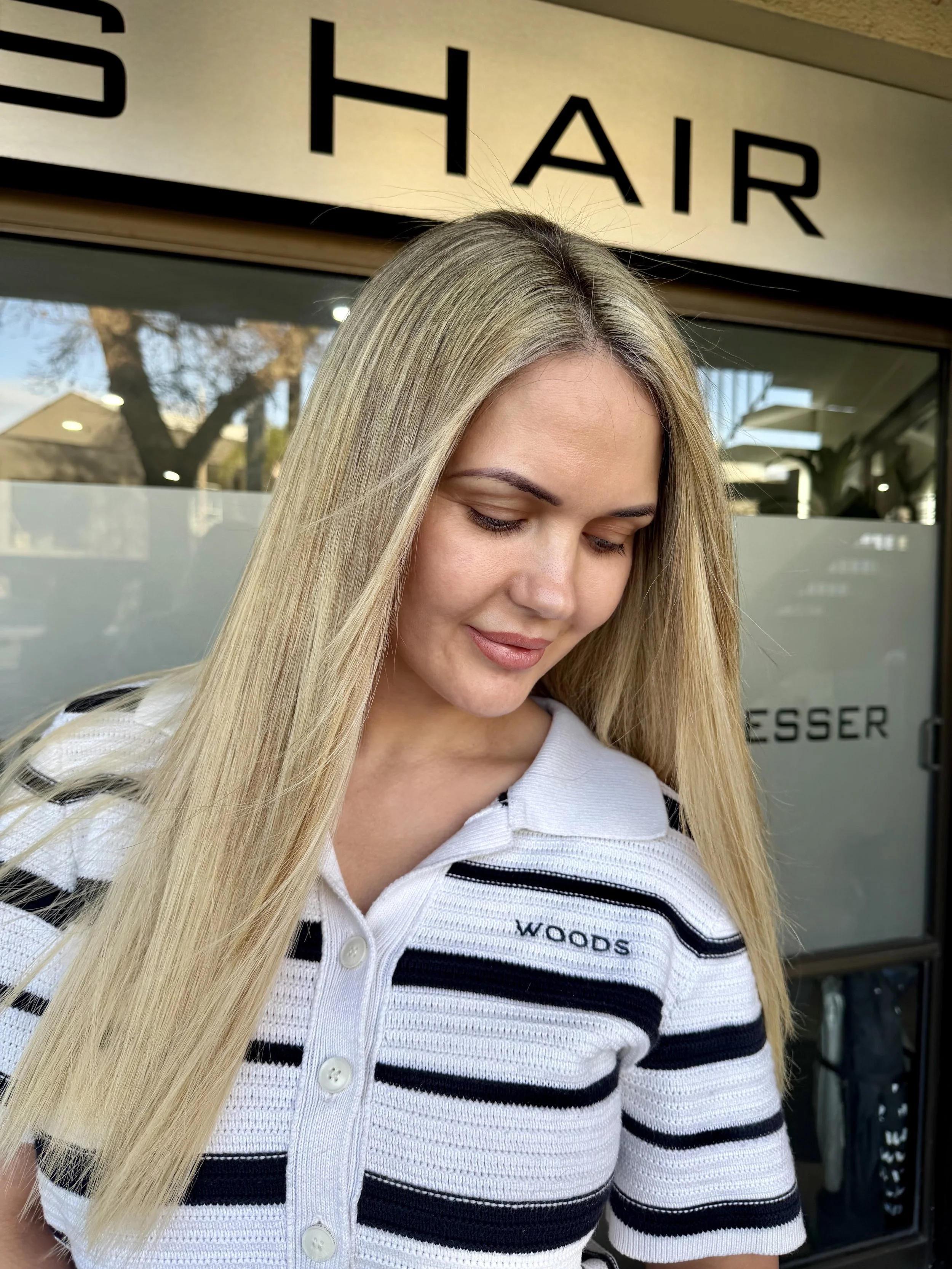
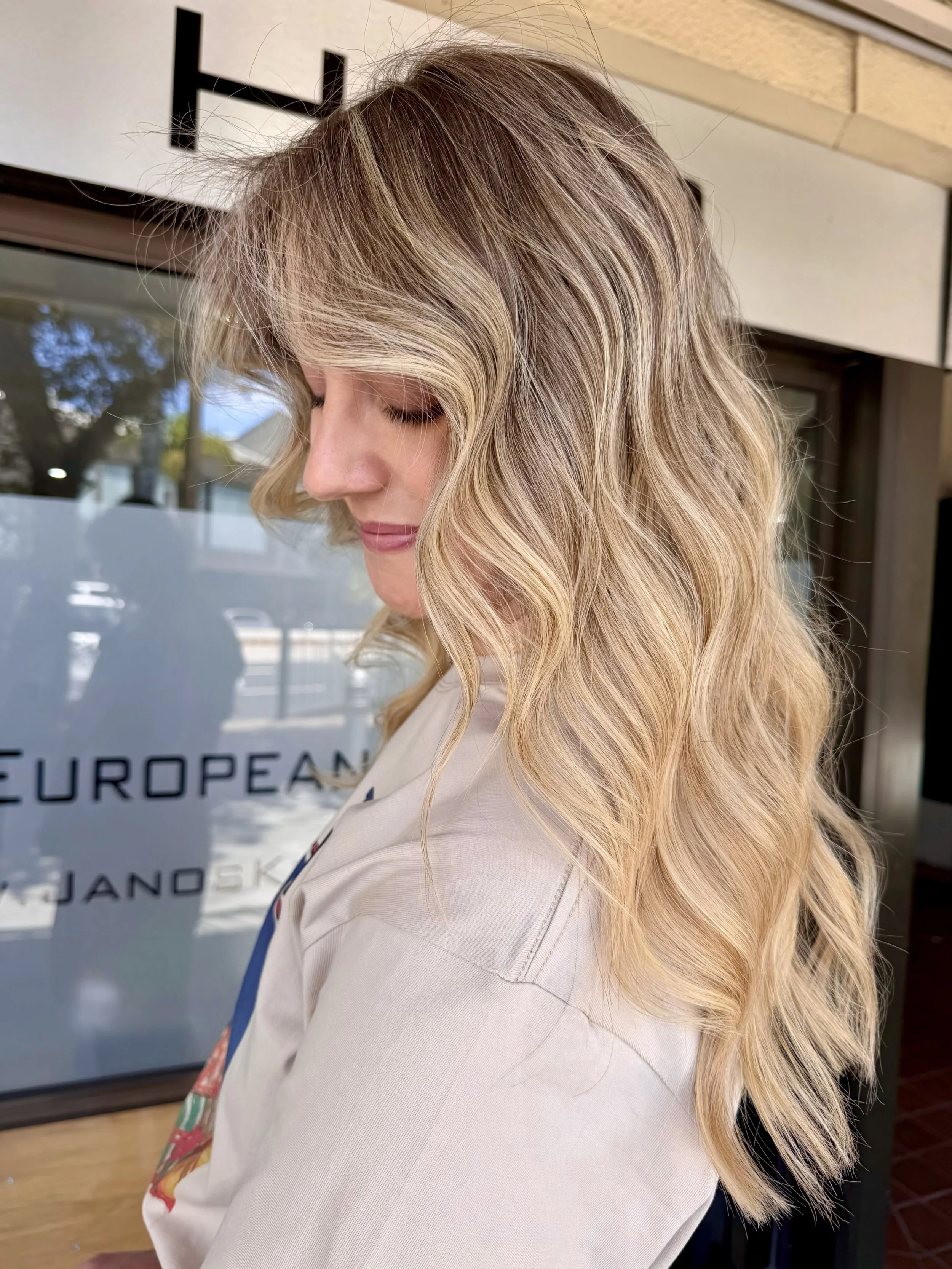
![Soft blonde Foilayage waves on long hair, colour by Janos Kiss Hair, Cremorne]()
Foilayage
-
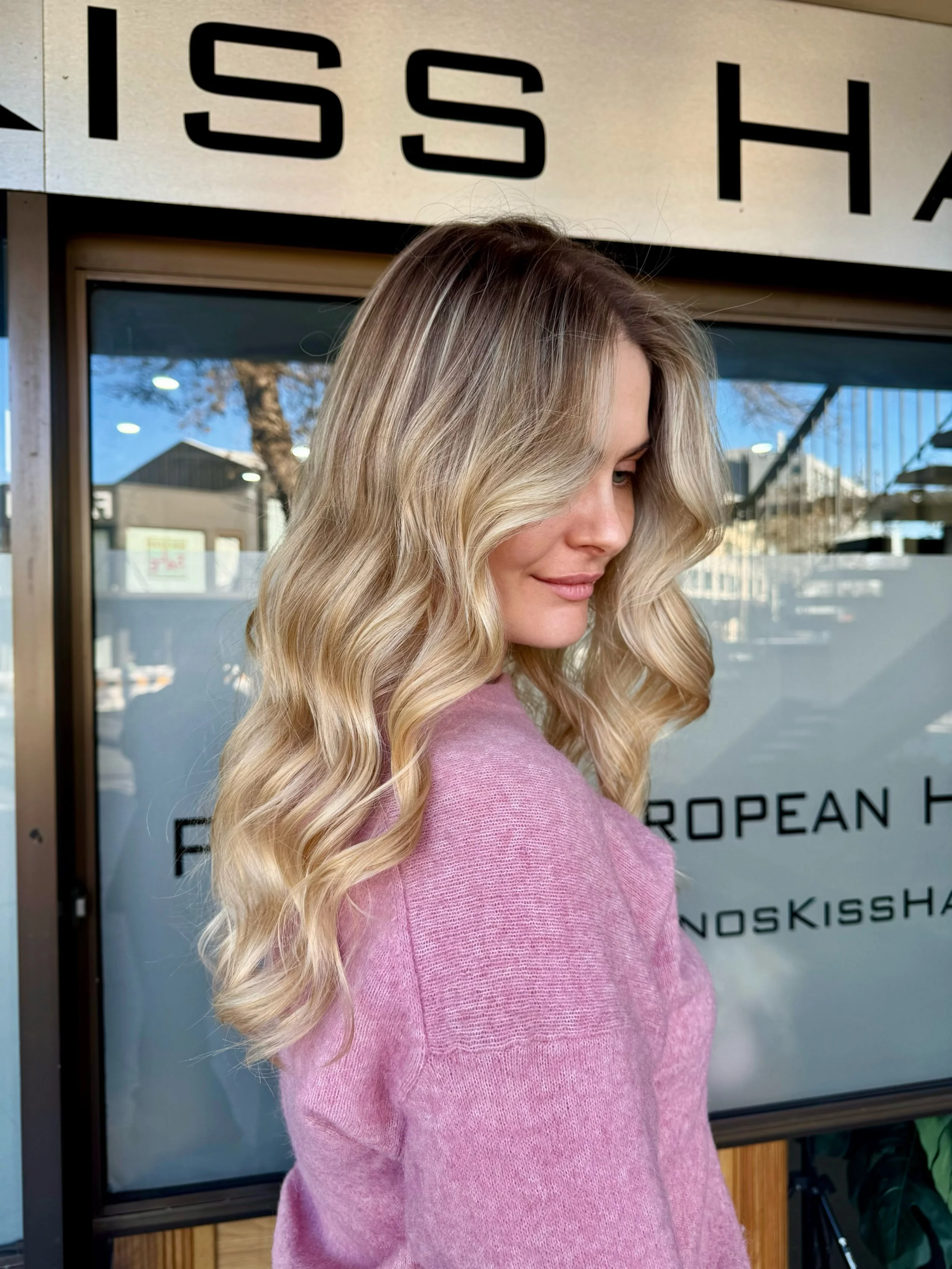
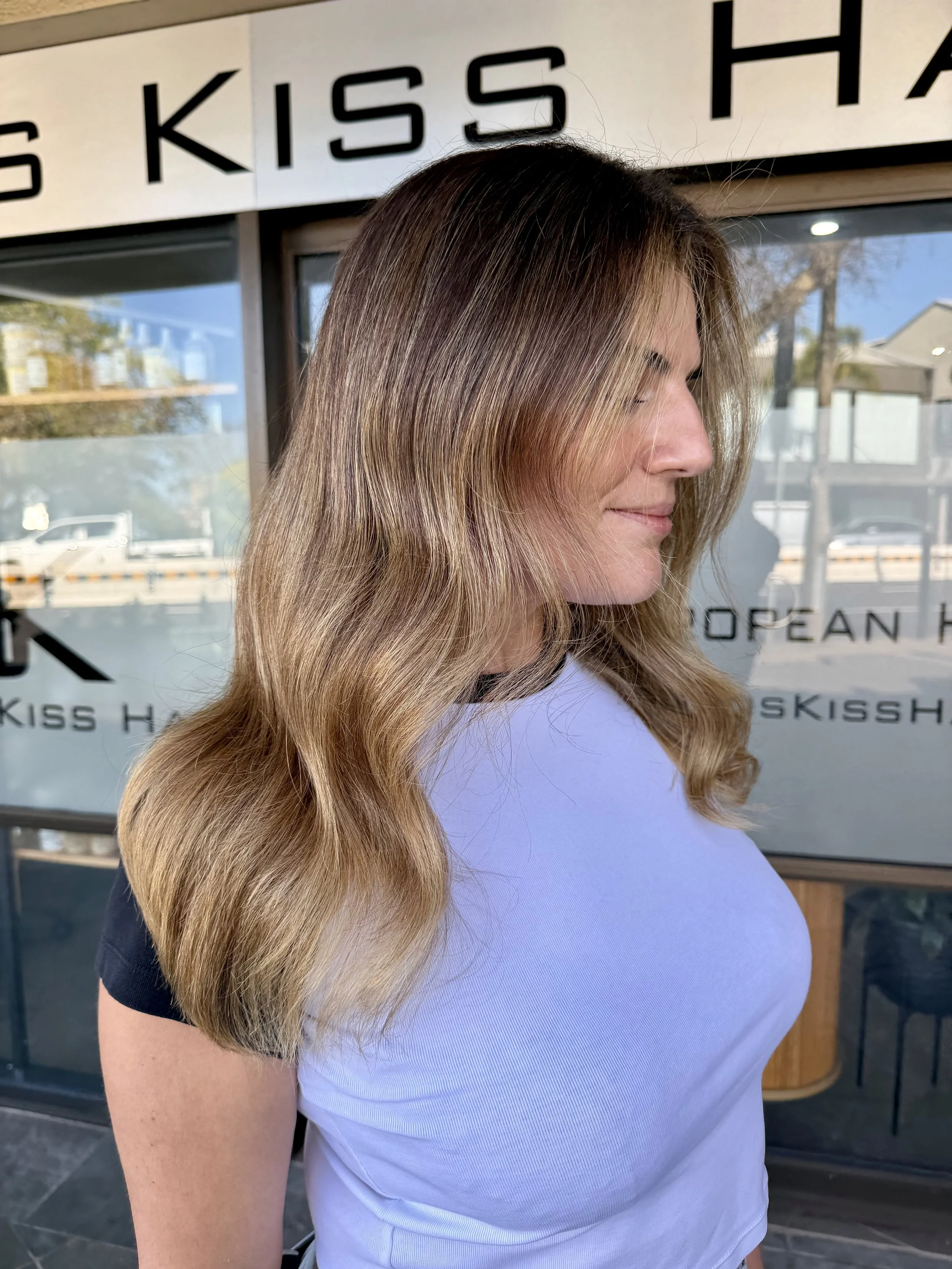
![Brunette to honey-blonde balayage and Foilayage on long wavy hair, Janos Kiss Hair, Cremorne]()
Balayage/Folayage
-
![Long straight blonde Airtouch result, Janos Kiss Hair, Cremorne]()
Airtouch
-
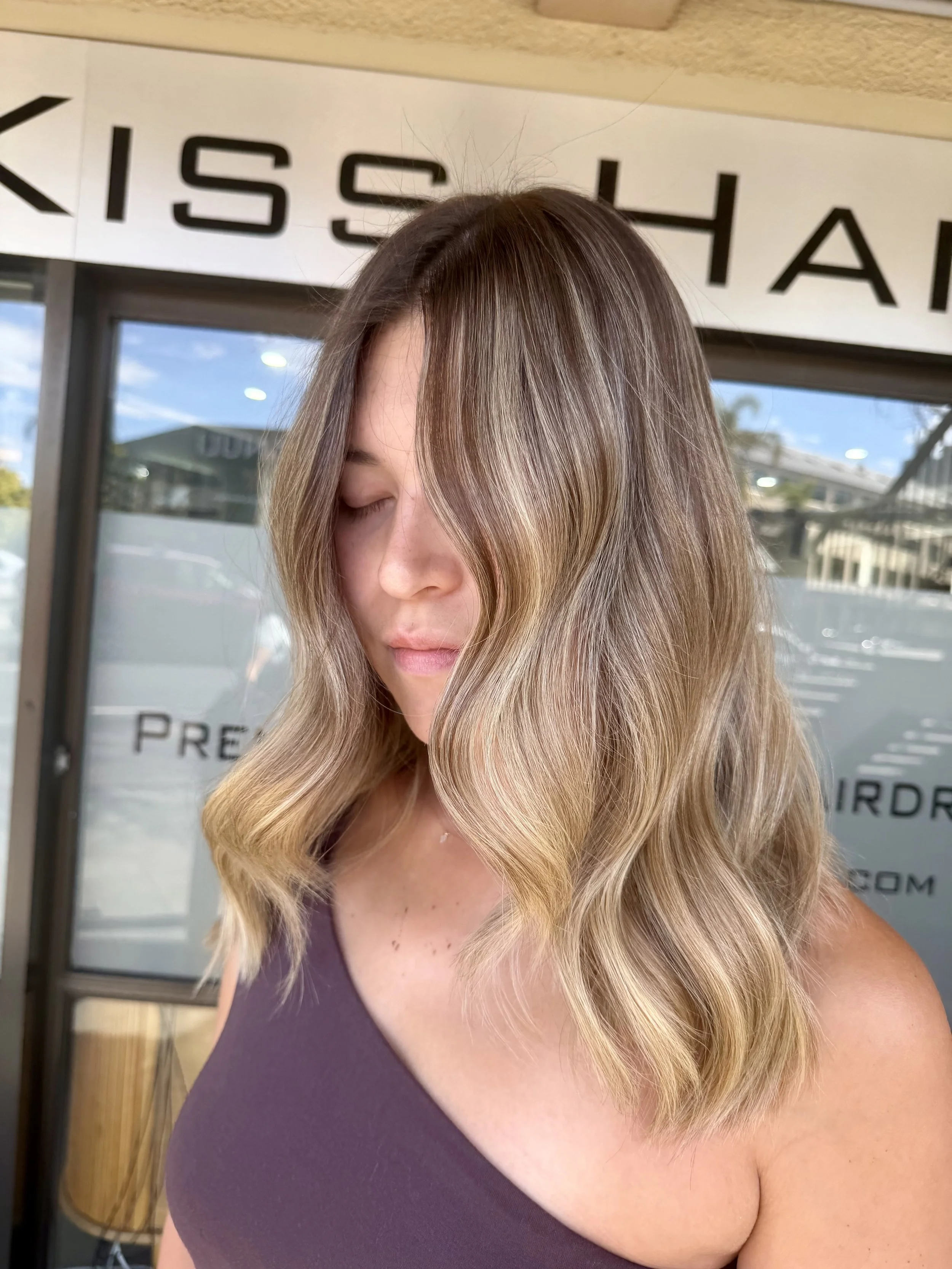
![Soft brunette-to-honey balayage and Foilayage on shoulder-length wavy hair, Janos Kiss Hair, Cremorne]()
Balayage/Folayage
-
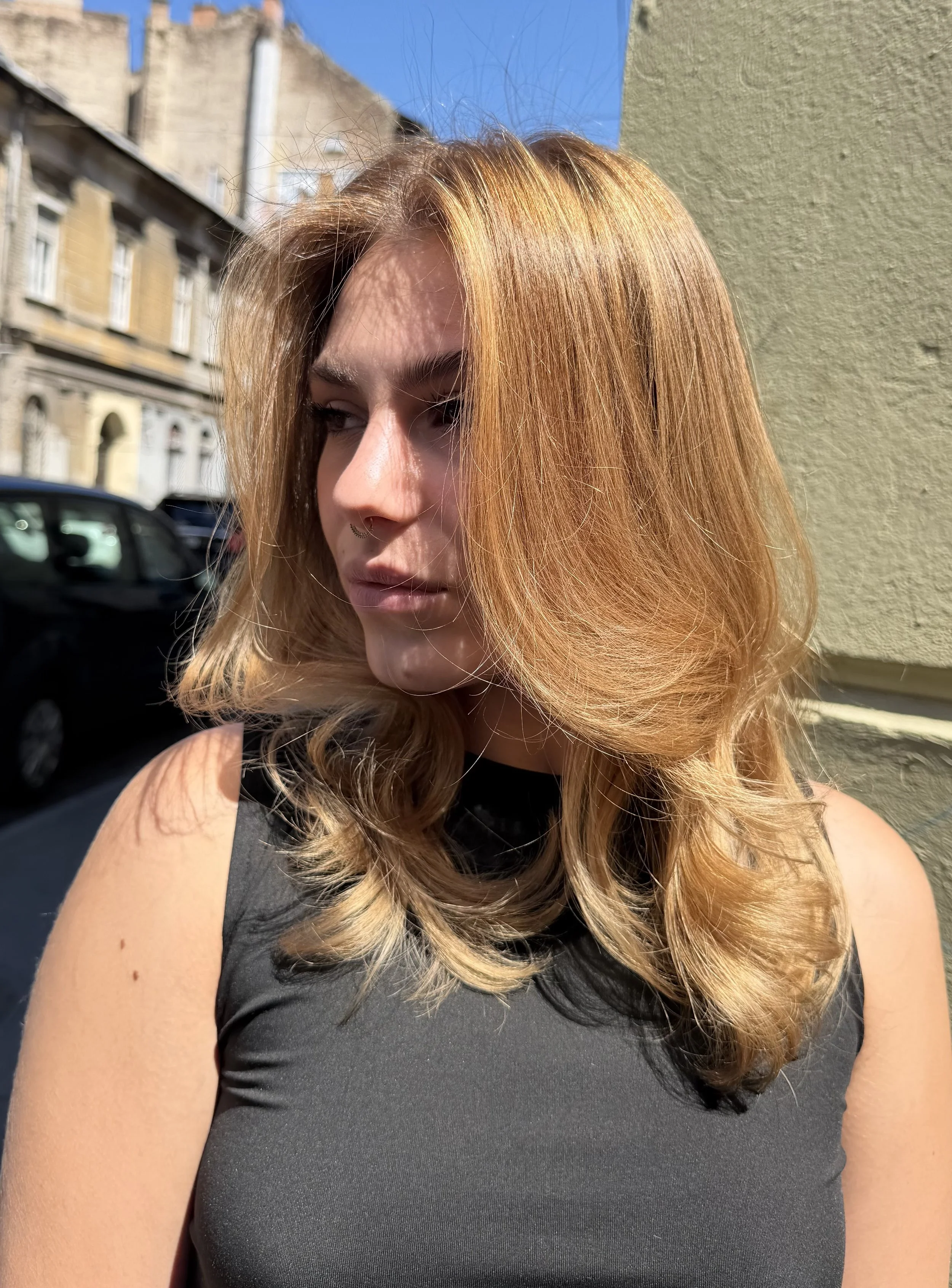
![Warm golden-copper layered blonde with Airtouch highlights, colour by Janos Kiss]()
Airtouch
-
![Long wavy blonde Airtouch with a soft rooted blend, Janos Kiss Hair, Cremorne]()
Airtouch
-
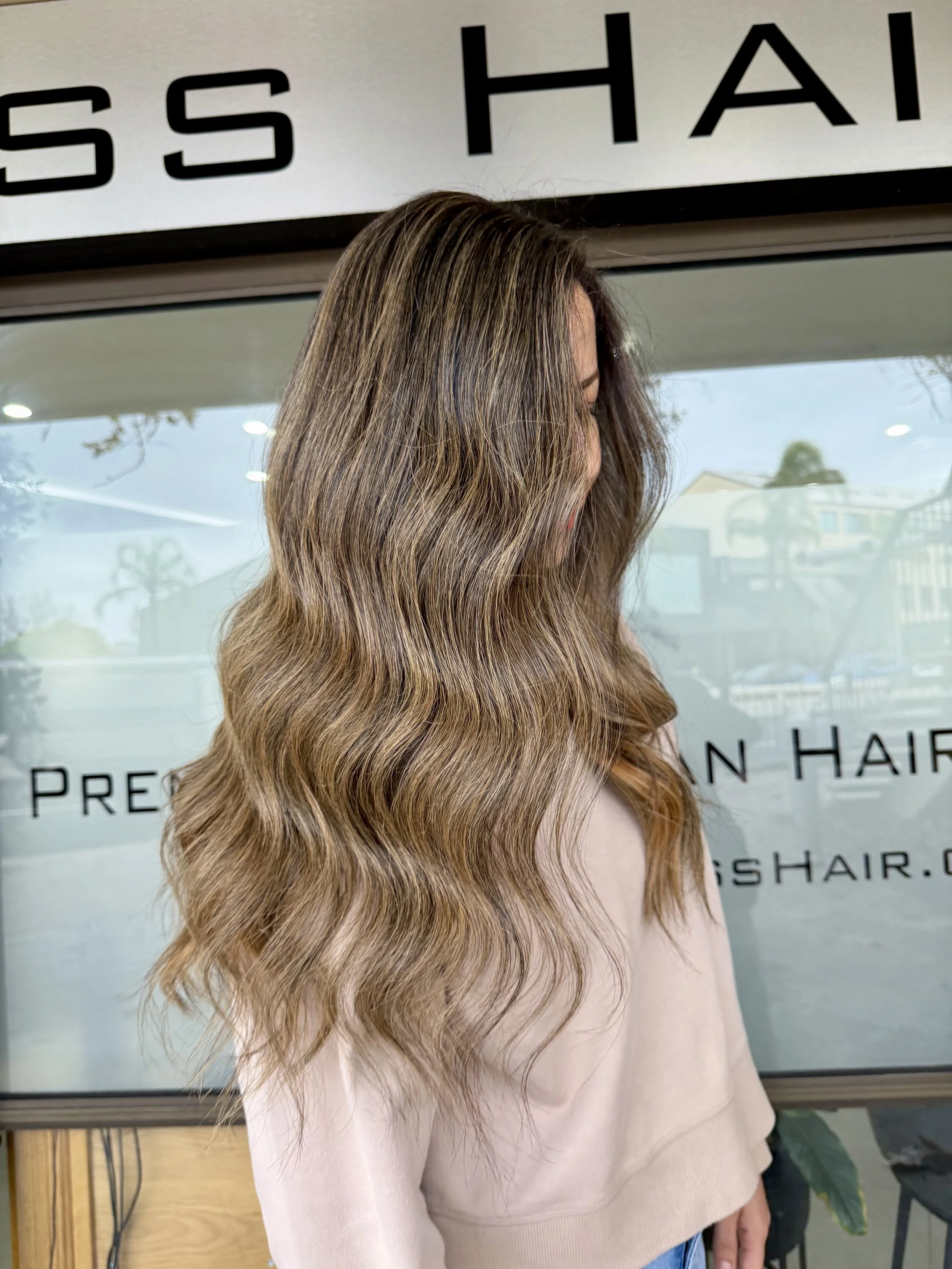
![Long wavy brunette hair with soft caramel Airtouch highlights, colour by Janos Kiss Hair, Cremorne]()
Airtouch
How do we keep your creamy blonde from going brassy?
We lift with high-lift colour that stays clean and creamy as it grows out, then finish with precise toning to create your perfect shade, whichever technique is right for you.
Learn why blonde hair goes brassy.
Frequently asked
-
Balayage is hand-painted for natural dimension; Airtouch uses an air technique to isolate strands for an even softer, longer-lasting regrowth blend. Airtouch typically lasts longer between appointments than balayage alone.
-
Airtouch typically lasts 5-6 months between sessions, alternating between a full head and a half head, compared with 6-8 weeks for classic highlights—or 8-10 weeks with a Root Tap added—because the Airtouch regrowth transition is much softer.
-
Not with the right formulation and toning — we specifically use high-lift techniques and toning chosen to resist brassiness, which is a core part of how we approach every blonde service. Learn more: Why won't your blonde go brassy here?
-
Usually Airtouch — because only select strands are lightened rather than a full section, we have far more control over exactly where colour is placed, which suits fine or fragile hair better. If your hair has previous damage, a pre-treatment may be required before any blonde service to make sure it's healthy enough to colour safely.
-
Yes — in fact, clients moving from traditional foiling to Airtouch usually see a more natural result than they had before, since Airtouch blends far more softly than classic foils ever can.
-
Yes, for a lower percentage of grey — balayage and Airtouch can blend it beautifully. Once grey becomes more significant, full coverage typically requires a permanent colour application, which goes beyond what balayage, Airtouch or toning are built for. If you're happy to keep some grey visible, our dedicated Grey Blending service is the better fit; if you want it fully covered, that's a regrowth colour service, and we'll talk it through at your consultation.
-
We don't use traditional bleach to lighten your hair, so our specialised high-lift colour method is a much safer option. But with any chemical colour service, your hair will change — don't expect it to feel exactly the same as hair that's never been coloured.
-
Roughly, including treatment, cut and blow-dry: Classic Highlights (full head) — 2¾–3 hours; Balayage/Foilayage — 3–4 hours; Airtouch — 4–5 hours. Exact timing depends on your individual hair density and needs.
-
Yes — all three techniques can be adapted to shorter hair.
-
Yes — this is part of why we use Foilayage rather than pure hand-painted balayage: it gives more controlled, stronger lift than freehand application alone, which makes it more reliable on dark, previously uncoloured hair.
-
We give you a personalised haircare routine and recommend specific Davines home-care products suited to your hair — though with our colouring approach, a good home routine is all you need between visits.
-
Two things. First, toner, the layer of colour applied after traditional bleach to cancel yellow, typically fades within 4–6 weeks, letting the yellow-orange underneath show through again. Second, metal build-up from hard water, pools, mineral deposits and, in older buildings, copper pipes, which pulls colour toward warm, brassy tones however good the original colour was. Our specialised colour lifts and deposits in one step instead of relying on a toner that's guaranteed to fade, and a chelating treatment during the colour process removes metal build-up. At home, we recommend a shower water filter, Heart of Glass Silkening Chelating Shampoo and Beautiful Things Restoring Leave-In Mask. Full explanation: Why Does Blonde Hair Go Brassy?
-
Use a protective product with UV filters before you go out, then rinse and rehydrate afterwards. We recommend Davines SU/ Hair Milk before sun exposure, SU/ Hair & Body Wash after, and SU/ Hair Mask if the sun, chlorine or salt has left your hair dry or damaged. More on summer care: Why Does Blonde Hair Go Brassy?
-
Yes, we do. Book a consultation and bring pictures of your desired look, any pictures of the colour shade you like — the pictures can tell us how you would like to have the colour placement.
-
No — hair is dried after every colour service so the result can be properly checked. Colour often looks different wet than dry, and drying it is how both you and your stylist confirm it actually matches what was agreed before you leave.
-
Yes — please arrive with clean hair, washed the same day or the day before. We need to see your natural texture and true colour clearly to get your service right; product buildup or a few days' oil can hide both.